
Birthplace of the Automobile and Home of the Black Forest
Baden-Württemberg, located in the southwestern region of Germany, is renowned for its rich cultural heritage, industrial prowess, and stunning landscapes. It is one of the country's 16 federal states, encompassing an area of approximately 35,752 square kilometers. As of the latest census, the state is home to around 11 million residents, making it one of the most populous states in Germany. The state's geographical positioning is strategic, bordered by France to the west, Switzerland to the south, and Bavaria to the east, thus facilitating not only national but also international interactions.
The capital city of Baden-Württemberg is Stuttgart, a hub of culture and commerce. Stuttgart is well recognized as a pioneering center for the automotive industry, hosting the headquarters of notable companies such as Daimler AG and Porsche. This economic vitality contributes significantly to the state’s reputation as a powerhouse of innovation and technology, attracting both domestic and foreign investments. Beyond its industrial significance, Stuttgart is also celebrated for its rich cultural landscape, featuring museums, theaters, and various music festivals that underline the state's cultural significance.
Historically, Baden-Württemberg was formed in 1952 through the amalgamation of the former states of Baden, Württemberg-Baden, and Württemberg-Hohenzollern. This historical fusion has bestowed the region with a unique blend of traditions and dialects, contributing to its diversity. From the rolling Black Forest hills to the picturesque vineyards of the Baden wine region, the state's natural beauty is equally compelling.
Places
Baden-Württemberg Highlights

Stuttgart
Stuttgart, the capital city of Baden-Württemberg in Germany, was founded in the early 10th century. It has evolved into a vibrant metropolis that exemplifies a harmonious blend of historical charm and modern sophistication. The city is located in a valley, surrounded by the scenic Stuttgart Hills and vineyards, which provide both a picturesque landscape and a favorable climate for various outdoor activities. The historical development of Stuttgart can be traced back to its origins as a stud farm, leading to its name, which translates to "stud paddock." Over the centuries, Stuttgart has been shaped by key events, including its establishment as a ducal and later royal residence. The city's role expanded significantly during the industrial revolution with the growth of major automotive companies like Mercedes-Benz and Porsche, which helped solidify its status as an economic powerhouse in Germany. Stuttgart's cultural heritage is displayed in its landmarks, such as the iconic New Palace, the old State Gallery, and the lively Markthalle, which celebrate its artistic legacies. The city's commitment to preserving its historical roots is evident, with numerous museums, theaters, and annual cultural events that underline its significance within the region. Stuttgart also serves as a hub for education and research, hosting prominent universities and institutions that contribute to the knowledge economy.
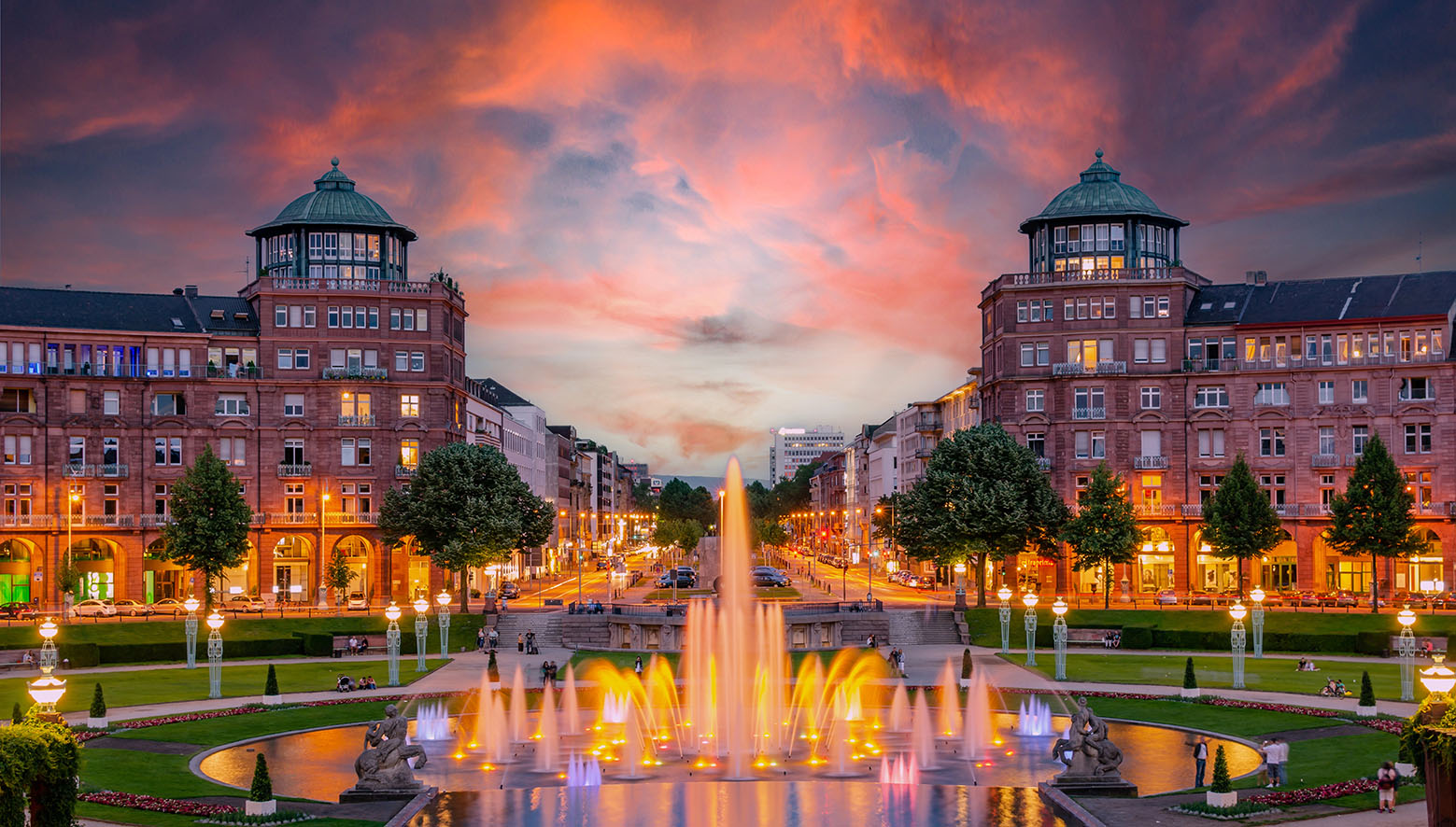
Mannheim
Mannheim, located in the heart of Baden-Württemberg, has a rich history that dates back to the 17th century. Founded by Elector Friedrich IV in 1606, Mannheim was meticulously planned, a departure from the organic growth of many contemporaneous cities. The design of Mannheim was innovative, featuring a grid layout that emphasized functionality and accessibility, a plan that would lay the groundwork for its future development. During the 18th and 19th centuries, Mannheim experienced significant transformation, especially during the industrial revolution. The city's strategic location along the Neckar River facilitated trade and industry, making it a critical economic hub. By the mid-19th century, Mannheim had established itself as a center for machinery manufacturing and other industries, attracting workers and businesses alike. The devastation of World War II left an indelible mark on Mannheim. The city suffered extensive damage due to bombing raids, leading to the loss of many historical structures and landmarks. However, the post-war period saw a determined recovery effort, as citizens and government officials worked to restore and rebuild the city. This transformation not only revitalized Mannheim but reinforced its status as a significant economic center in the region.Among the historical landmarks in Mannheim is the Mannheim Palace, an impressive Baroque structure and the largest palace in Germany.
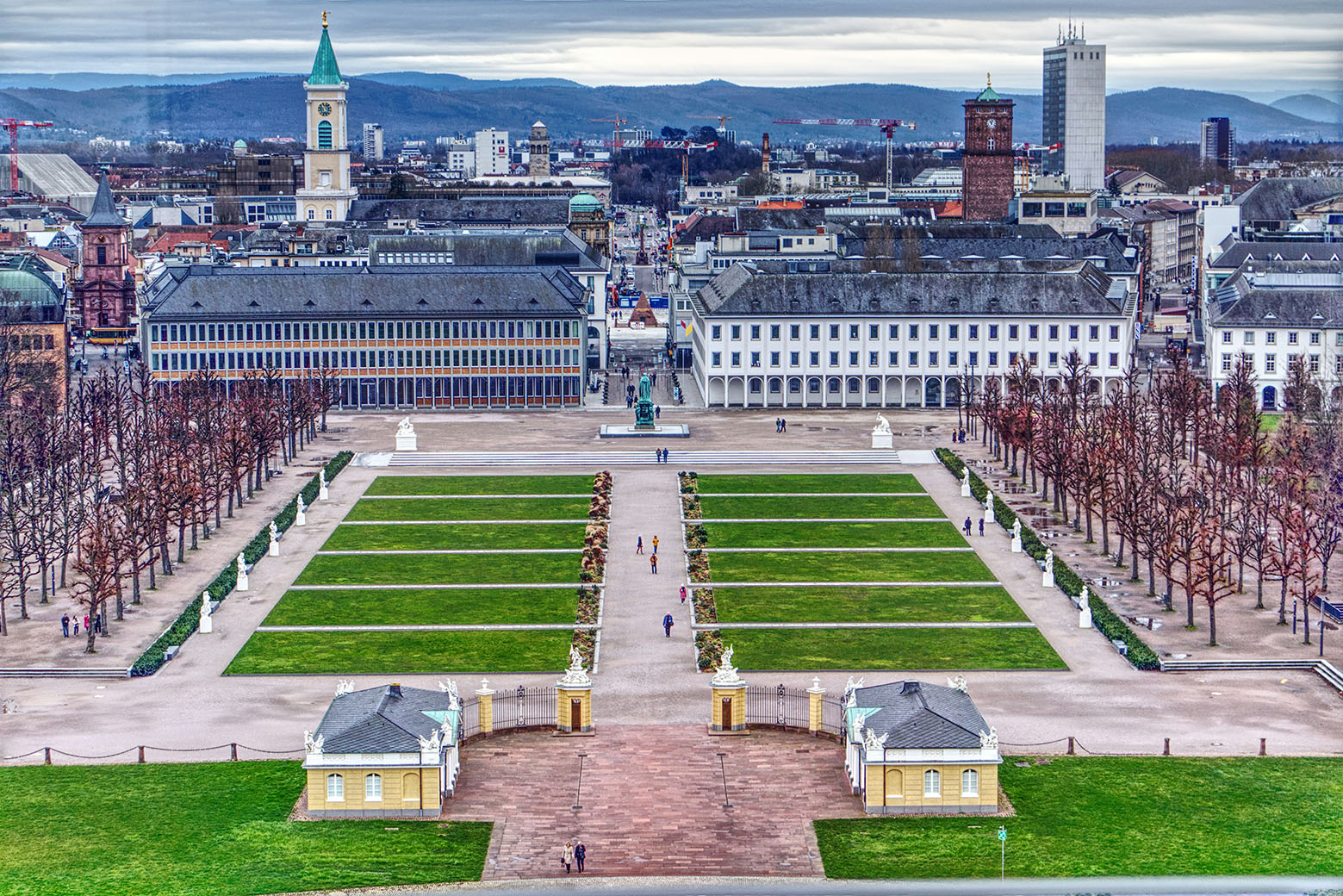
Karlsruhe
Karlsruhe has a rich history that begins with its establishment in 1715. Founded by Margrave Charles III William, the city was envisioned as a planned settlement, with the Karlsruhe Palace at its center. The layout of Karlsruhe is distinctive, featuring a fan-shaped design that radiates outward from the palace, symbolizing the enlightenment ideals of order and reason that characterized the era. Throughout its history, Karlsruhe has experienced significant transformations influenced by various political developments. Initially part of the Margraviate of Baden, the city prospered and became the seat of the governing authority. However, this growth was not without challenges, as the region underwent changes during the turbulent periods of the French Revolution and subsequent Napoleonic Wars. During these times, Karlsruhe served as a refuge for many displaced individuals, which contributed to its diverse cultural landscape. By the 19th century, Karlsruhe had firmly established itself as a center for law and jurisprudence. It became the home of various significant legal institutions, contributing to its reputation as the "Baden-Württemberg City of Law." Notably, the Federal Constitutional Court of Germany is located in Karlsruhe, underscoring the city’s pivotal role in the nation's legal system.